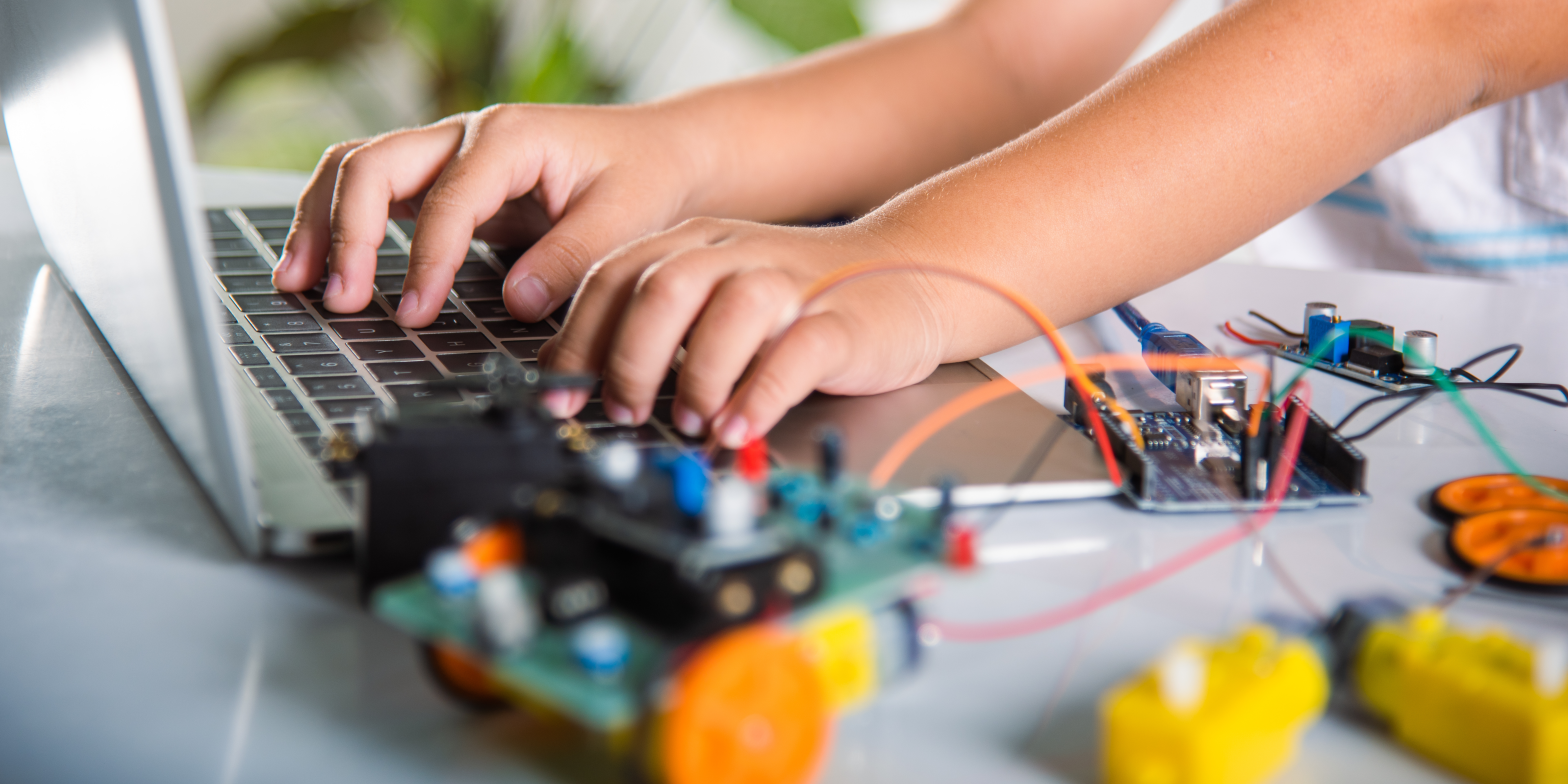
The curriculum serves as an introduction to the foundational concepts across biology, chemistry, and physics.
| Skills | Outcomes |
| Biology | 1. Cells and Organisation: – Understand the structure and function of plant and animal cells. – Identify the main parts of a cell (e.g., nucleus, cytoplasm, cell membrane). – Understand the levels of organization in living organisms: cells, tissues, organs, and systems. 2. Reproduction: – Understand the basics of human reproductive systems. – Explain the stages of human development, from fertilization to birth. – Understand plant reproduction, including pollination, fertilization, and seed dispersal. 3. Ecosystems: – Understand food chains and food webs. – Explain the roles of producers, consumers, and decomposers. – Understand the basics of habitats and adaptation. |
| Chemistry | 1. Particles and their Behaviour: – Understand the particle model of matter. – Describe the states of matter (solid, liquid, gas) and changes of state (melting, freezing, boiling). – Explain diffusion and the behaviour of particles in different states. 2. Elements, Atoms, and Compounds: – Understand the concept of elements, compounds, and mixtures. – Identify elements and compounds using symbols and formulas. – Describe the basic structure of atoms. 3. Chemical Reactions: – Understand what happens during a chemical reaction. – Identify signs of a chemical reaction (e.g., color change, gas production, temperature change). – Understand the conservation of mass in chemical reactions. |
| Physics | 1. Forces: – Understand the different types of forces (e.g., gravity, friction, air resistance). – Explain the effects of forces on motion and how they can change the speed or direction of an object. – Understand balanced and unbalanced forces. 2. Energy: – Understand the different forms of energy (e.g., kinetic, potential, thermal). – Explain energy transfers and the concept of conservation of energy. – Understand basic energy resources and their uses (renewable and non-renewable). 3. Waves: – Understand the basics of waves, including sound and light waves. – Explain how sound is produced and travels through different media. – Understand the properties of light, including reflection and refraction. |
| Scientific Skills | 1.Working Scientifically: – Develop skills in planning and conducting scientific investigations. – Understand the importance of making accurate observations and measurements. – Learn to record and present data using tables, charts, and graphs. – Develop skills in drawing conclusions based on evidence and justifying those conclusions. 2. Practical Skills: – Learn to use basic laboratory equipment safely and effectively (e.g., microscopes, Bunsen burners). – Understand the importance of following safety rules in the laboratory. – Develop skills in observing, hypothesizing, experimenting, and drawing conclusions. |
These outcomes aim to provide Year 7 students with a broad understanding of fundamental scientific concepts and the skills necessary to engage in scientific inquiry. This foundation prepares them for more advanced topics in subsequent years.
 Top Marks Hub